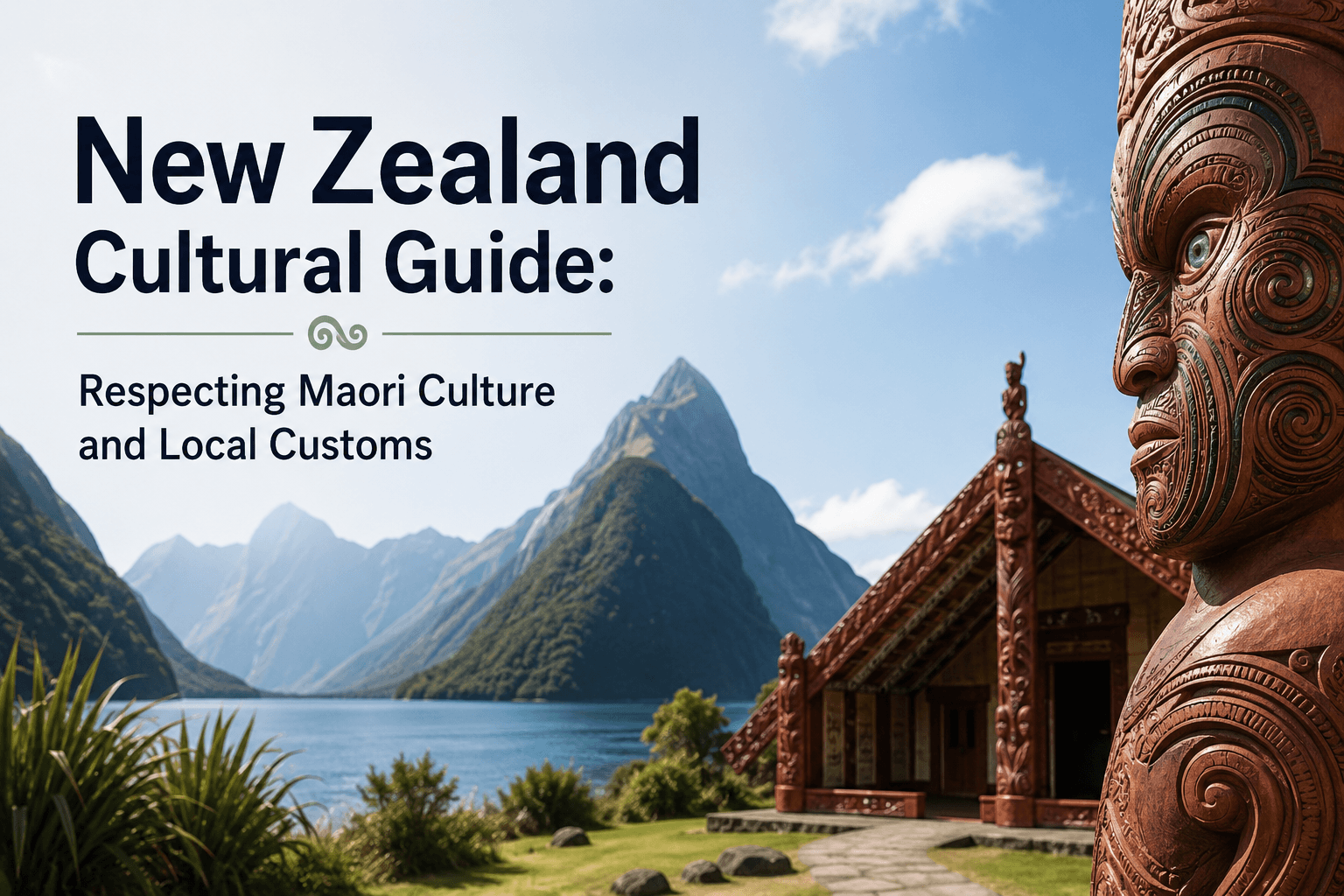
New Zealand Cultural Guide: Respecting Maori Culture and Local Customs
Complete cultural guide to New Zealand. Learn about Maori culture, customs to respect, cultural experiences, proper etiquette, and how to engage respectfully with New Zealand's indigenous culture.
New Zealand is Aotearoa in te reo Maori (the Maori language) – 'land of the long white cloud.' Maori are the indigenous people of New Zealand with a rich culture spanning over 700 years. Understanding and respecting Maori culture is essential for visitors seeking authentic New Zealand experiences. This guide covers Maori history and significance, cultural protocols visitors should follow, meaningful cultural experiences, proper pronunciation of Maori place names, and how to respectfully engage with Maori communities and sacred sites.
Understanding Maori History and Significance
Maori arrived in New Zealand around 1280 AD, establishing a distinct culture adapted to the islands' unique environment. Maori developed sophisticated traditions, spirituality, agriculture, and governance systems. The arrival of European explorers (1769) and subsequent colonization devastated Maori populations through disease, warfare, and dispossession. Maori culture was suppressed for over a century – te reo Maori (the language) was banned in schools. Recent decades have seen major cultural revival – te reo Maori is now an official language, Maori are reclaiming their heritage, and Maori culture is recognized as central to New Zealand identity. Many New Zealand place names, cultural practices, and values reflect Maori heritage. Respecting Maori culture means acknowledging this history and actively supporting cultural preservation and respect.
Maori Cultural Protocols: Dos and Don'ts
Several cultural protocols should be observed. Remove shoes when entering marae (Maori meeting grounds) unless told otherwise. Don't sit on tables – Maori culture sees tables as tapu (forbidden/sacred) in certain contexts. Don't photograph people without permission, especially during ceremonies. Don't touch tapu (sacred) objects without permission. Don't eat in certain areas (Maori have cultural restrictions on where eating is appropriate). Don't point at people – it's considered rude. Respect when someone is speaking – listen without interrupting. Learn basic Maori greetings and use them appropriately. If invited to a hangi (earth oven feast), accept graciously. If visiting a marae, follow guides' instructions – they know proper protocols. If you make a mistake, acknowledge it respectfully – Maori culture values humility.
Learning Te Reo Maori: Pronunciation and Key Words
Te reo Maori pronunciation is phonetic – words are pronounced as written. Key place names: Auckland is 'Tāmaki Makaurau,' Wellington is 'Te Whanganui-a-Tara,' Christchurch is 'Ōtautahi.' Vowels: a (ah), e (eh), i (ee), o (oh), u (oo). Consonants are mostly pronounced as in English. 'Wh' sounds like 'f.' 'Ph' sounds like 'f.' Double vowels are held longer. Common phrases: 'Kia ora' (hello/thanks), 'Haere mai' (welcome), 'E hoa' (friend), 'Ka pai' (good). Learning pronunciation shows respect. Don't anglicize Maori place names – use correct pronunciation. Many New Zealand place names are Maori – learn their meanings. Using te reo correctly honors Maori culture.
Kia ora = Hello / Thank you
Haere mai = Welcome
Ka pai = Good / Okay
E hoa = Friend
Whānau = Family
Mana = Prestige / spiritual power
Tapu = Sacred / forbidden
Kaitiakitanga = Guardianship / stewardship
Whakapapa = Genealogy
Aroha = Compassion / love
Sacred Sites and Respectful Visiting
Many New Zealand locations are sacred to Maori. Mountains like Tongariro (Tongariro Alpine Crossing), Ruapehu, and Aoraki/Mt. Cook are tapu to Maori communities. Visitors should be respectful – don't remove rocks, plants, or artifacts. Don't modify mountains – climbing these peaks is a privilege granted by Maori communities. Geothermal areas (Rotorua region) often have spiritual significance. Don't bathe in thermal pools unless specifically designated for public use – many are sacred and reserved. Cemeteries and burial grounds must be treated with respect – don't walk on graves or remove anything. When visiting archaeological sites, stay on designated paths. If you see signs indicating tapu areas, respect them. Ask local guides about cultural significance of locations you visit.
Authentic Maori Cultural Experiences
Engaging authentically with Maori culture enriches your New Zealand experience. Visit marae-based cultural centers where Maori guide you through traditions. Attend hangi feasts – earth oven cooking is traditional and delicious. Learn about traditional crafts: weaving (tā moko), woodcarving (whakairo), bone/jade carving (bone taonga). Watch or participate in haka performances – traditional dance with spiritual significance. Visit Maori art galleries and museums. Participate in cultural workshops. Support Maori-owned businesses – tourism operators, restaurants, craft makers. These authentic experiences fund cultural preservation. Choose operators who employ Maori guides and respect cultural protocols. Avoid 'tourist trap' performances that trivialize culture – seek authentic, community-run experiences.
Maori Arts and Crafts: Understanding Significance
Maori arts aren't just decorative – they carry spiritual and genealogical significance. Tā moko are traditional face tattoos with unique meanings for each person – they're genealogical records, not just body art. Whakairo (woodcarving) and tā moko (jade carving) tell stories of ancestors and achievements. Woven items carry cultural knowledge. Don't assume Maori art is merely decorative – appreciate its deep meaning. If buying Maori art, purchase from Maori artisans – support creators directly. Authentic pieces carry genuine cultural significance. Avoid mass-produced 'Maori-style' souvenirs – they disrespect authentic culture. Museum pieces show traditional techniques and significance. Learning about Maori arts helps you understand cultural values and history.
Respecting Maori Land Rights and Environmental Guardianship
Maori have strong spiritual connections to land and natural features. The concept of kaitiakitanga (guardianship/stewardship) means Maori see themselves as caretakers of nature, not owners for exploitation. When visiting natural areas, practice environmental respect: leave no trace, don't remove plants or rocks, respect wildlife, manage waste. Maori concepts of sustainability offer lessons for responsible tourism. Support conservation efforts Maori lead. Recognize that many areas you visit have Maori names reflecting cultural connections. Understand that when Maori advocate for environmental protection, they're honoring ancestral responsibilities. This aligns with modern conservation values.
Supporting Maori Communities and Businesses
Respectfully engaging with Maori includes supporting Maori communities economically. Choose Maori-owned accommodations, restaurants, and tour operators. Purchase from Maori artisans and craftspeople. Attend Maori cultural events and festivals. Employment in tourism by Maori guides ensures cultural knowledge is shared authentically and Maori benefit economically. Support Maori-led conservation initiatives. Learn about Maori social and political movements. Respecting Maori culture means respecting their aspirations for cultural preservation, economic opportunity, and self-determination.
Conclusion
New Zealand's Maori culture is central to the nation's identity and offers visitors profound experiences. Respect for Maori culture is both ethically important and practically valuable – it opens doors to authentic experiences and meaningful connections. By learning proper pronunciations, observing cultural protocols, visiting sacred sites respectfully, supporting Maori businesses, and engaging authentically with Maori communities, you honor the indigenous culture that makes New Zealand unique. This respect enriches your travels and contributes to cultural preservation. Ready to engage respectfully with Maori culture? Apply for your NZeTA/applyApply for your NZeTA and begin planning a culturally aware New Zealand adventure!
Ready to Apply for Your NZeTA?
Start your New Zealand adventure today with a quick and easy NZeTA application