
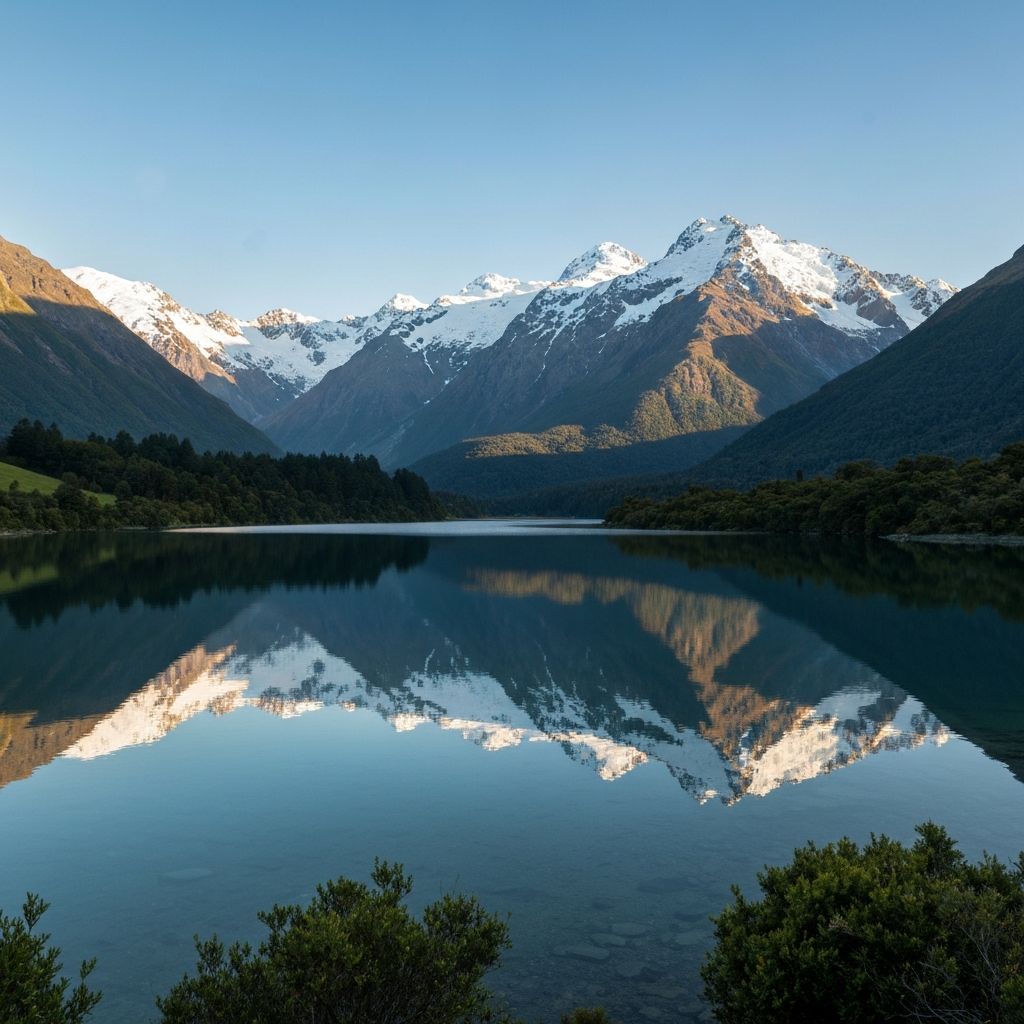
Is New Zealand Safe to Visit?
Your Complete 2026 Travel Safety Guide for International Visitors
New Zealand is One of the World's Safest Destinations
Despite global geopolitical tensions, New Zealand maintains exceptional safety standards, world-class healthcare, and stable governance. Learn more about entry requirements and start your journey today.
Quick Navigation
Understanding the Global Situation: Context for Travelers
The current geopolitical landscape involving US-Israel-Iran tensions is a significant global concern that many travelers understandably worry about. However, it's crucial to understand that New Zealand's geographic isolation, political neutrality, and strategic position provide natural protection from these regional conflicts.
Geographic Reality: New Zealand is located in the South Pacific Ocean, over 2,000 km from its nearest significant neighbor, Australia. It sits in a completely separate hemisphere from the Middle East, separated by approximately 15,000 kilometers. This vast geographic distance means that regional conflicts in the Middle East have virtually no direct impact on New Zealand's domestic security.
Political Neutrality: New Zealand maintains an official policy of non-alignment and neutrality in international conflicts. The country is not party to military alliances that would directly involve it in Middle Eastern conflicts. While New Zealand has diplomatic relationships with many nations, it does not serve as a strategic military hub or target.
2026 Travel Statistics to New Zealand
- • International visitor numbers: continuing upward trend
- • US visitors to NZ: increasing by 12-15% year-over-year
- • European visitor volume: at 15-year highs
- • Asian visitor recovery: exceeding pre-pandemic levels
- • Safety incidents involving international travelers: extremely rare
Why New Zealand is Exceptionally Safe: 8 Key Factors
1. Stable Democratic Governance
New Zealand ranks consistently in the top 10 globally for political stability and government effectiveness. The nation has maintained peaceful, democratic governance for over 150 years with strong rule of law and institutional integrity.
2. Exceptionally Low Crime Rate
New Zealand has one of the lowest violent crime rates in the developed world. Crimes targeting tourists are virtually non-existent. New Zealand Police are professional, responsive, and maintain strong community policing standards.
3. World-Class Healthcare Infrastructure
New Zealand's healthcare system ranks among the best globally. Travelers have access to modern medical facilities, qualified physicians, and comprehensive care. Emergency services are excellent and widely available across both urban and remote areas.
4. Advanced Emergency Response Systems
Sophisticated 111 emergency dispatch system, trained rescue services, and natural disaster preparedness protocols mean rapid response to any emergency. Air rescue services operate 24/7 nationwide.
5. Strict Border Security and Customs
New Zealand maintains rigorous border screening, biosecurity protocols, and customs procedures. These measures ensure only legitimate travelers enter and significantly contribute to overall safety and security.
6. Natural Hazard Preparedness, Not Terrorism Risk
New Zealand's security infrastructure focuses on natural hazards (earthquakes, volcanic activity) rather than terrorism concerns. The country's isolation and low strategic military importance mean it is not a target for international terrorism.
7. Welcoming, Multicultural Society
New Zealand is renowned for its welcoming attitude toward international visitors and immigrants. The society values diversity, inclusivity, and peaceful coexistence. Discrimination based on nationality or religion is rare and actively discouraged.
8. Geographic and Political Isolation Benefits
New Zealand's island nation status and distance from global conflict zones provides inherent protection. The country maintains peaceful relations with all nations and is not involved in any military conflicts.
US Travelers: Complete Safety Information & Recommended Routes
American travelers represent one of the largest international visitor groups to New Zealand. The good news: there are no specific safety concerns for US citizens traveling to New Zealand related to current geopolitical tensions. Check out our US-specific NZeTA guide for more details.
Recommended Travel Routes for US Citizens
Route 1: Direct Flights from US West Coast (Recommended)
Direct Options: San Francisco → Auckland, Los Angeles → Auckland, Dallas → Auckland
Benefits: Shortest journey time (15-17 hours), minimal connection points, highest comfort level, most predictable schedule
Carriers: United, American, Air New Zealand, Qantas (with one connection), Air Canada (with connection through Pacific gateway)
Route 2: Pacific Hub Connections (Excellent Alternative)
Options: US → Honolulu (Hawaii) → Auckland, US → Fiji → Auckland
Benefits: Breaks up long journey, opportunity for stopover in tropical location, often competitive pricing
Carriers: Qantas, Air New Zealand, Hawaiian Airlines
Route 3: Asian Hub Connections (Good Value Option)
Options: US → Tokyo, Bangkok, or Singapore → Auckland
Benefits: Often most economical, additional opportunity for side trip to Asia, wider carrier options
Note: Longer total travel time (22-26 hours) but frequently includes better pricing and flexible booking options
Safety Tips Specific to US Travelers
- Currency Exchange: US Dollar is accepted in major tourist areas, but NZD is the official currency. Exchange rates are fair. Credit cards and ATMs are widely available.
- Electrical Outlets: New Zealand uses Type I power outlets (unique three-pin design). Bring appropriate adapter. Voltage is 230V AC.
- Driving: New Zealand drives on the LEFT. If renting a car, remember this crucial safety rule. Roads are well-maintained in most areas.
- Health Insurance: International health insurance is recommended. New Zealand's healthcare is excellent but can be expensive for non-residents.
- Medication: Bring prescription medications in original containers with medical documentation. Some US medications may have different names in NZ.
US Embassy Support in New Zealand
The US Embassy in Wellington provides comprehensive support for American citizens in New Zealand. In case of emergency, the embassy can provide assistance, but New Zealand's safety record means emergencies are extremely rare for tourists.
Embassy Location: 29 Fitzherbert Terrace, Thorndon, Wellington
European Travelers: Complete Guide for UK, EU, and Schengen Visitors
Europe is experiencing its own geopolitical challenges, making New Zealand an increasingly attractive destination for European travelers seeking safety, stability, and extraordinary natural beauty. European citizens represent the second-largest international visitor group to New Zealand.
Why Europeans Choose New Zealand in 2026
- Geopolitical Distance: Complete separation from European conflicts and tensions
- Unique Natural Experiences: Pristine wilderness unlike anything in Europe
- English-Speaking Destination: No language barriers for UK and Ireland travelers
- Adventure Tourism Leadership: New Zealand is world-renowned for adventure activities
- Multi-Region Exploration: Two diverse islands with distinct characteristics
Recommended Travel Routes for European Travelers
Route 1: European Hub → Middle East Transfer Hub → Auckland
Common Routing: London/Paris/Frankfurt → Dubai → Auckland
Timing: 20-24 hours total (including layover). Very common and well-established routing with good connections.
Route 2: European Hub → Asian Hub → Auckland
Common Routing: London/Frankfurt → Singapore/Bangkok/Hong Kong → Auckland
Timing: 22-26 hours. Excellent for those wanting stopover in Asia. Often competitive pricing.
Route 3: Multi-City European Departure
Options: Depart from London, Paris, Amsterdam, or Frankfurt with similar routing patterns
Timing: Varies but typically 20-26 hours depending on hub choice
European-Specific Safety Information
European travelers, particularly from the UK, should note that while New Zealand is significantly safer than many European destinations, certain natural hazards are unique to the region:
- Unique Wildlife: New Zealand has venomous spiders and snakes, but serious incidents involving tourists are exceptionally rare. Basic precautions (checking shoes, bedding) are sufficient.
- Natural Hazards: Earthquakes and volcanic activity occur but are not typically dangerous for tourists who follow local guidance.
- Adventure Activity Safety: New Zealand is world-famous for adventure tourism. All major operators are highly regulated and maintain strict safety standards.
- Water Safety: Ocean waters are cooler than European Mediterranean. Rip currents exist on some beaches. Check local conditions before swimming.
Practical Information for European Travelers
Visa Requirements: Most EU citizens require NZeTA (New Zealand Electronic Travel Authority) for visa-free entry. British citizens also require NZeTA.
Currency: New Zealand Dollar (NZD). As of 2026, 1 EUR ≈ 1.70-1.75 NZD. Exchange rates are competitive.
Time Zone: New Zealand is GMT+12 (or GMT+13 during daylight saving, October-April). Significant time difference from Europe means jet lag is expected.
Healthcare: Reciprocal healthcare agreements exist with several European countries for emergency care. Comprehensive travel insurance is still recommended.
Asian and Pacific Travelers: Safety and Practical Information
Asia-Pacific is the fastest-growing source of visitors to New Zealand. Travelers from Japan, Singapore, South Korea, Thailand, and other nations are discovering New Zealand's unique appeal. The region's relative stability makes New Zealand an accessible destination compared to many global alternatives.
Regional Safety Considerations
New Zealand's geographic location in the South Pacific means Asian travelers who choose New Zealand are selecting a destination far removed from Middle Eastern geopolitical tensions. The country maintains stable relationships with all major Asian nations and is increasingly becoming an important tourism destination for Asia-Pacific development.
Key Advantages for Asian Travelers
- • Visa-free or easy visa access for most Asian nationalities
- • Increasingly Asian-friendly services and information available
- • Shorter flight times from major Asian hubs (11-17 hours)
- • Well-developed tourism infrastructure with multilingual support
- • Growing Asian communities in major cities
- • Exceptional value for money compared to other developed nations
Recommended Routing for Asian Travelers
From Japan: Tokyo/Osaka → Auckland (direct 11-12 hours on Air New Zealand or Japan Airlines)
From Singapore/Southeast Asia: Singapore → Auckland (direct 10-11 hours) or Bangkok/Kuala Lumpur → Auckland
From South Korea: Seoul → Auckland (11-13 hours via Air New Zealand, Qantas, or Korean Air)
From China: Shanghai/Beijing → Auckland (typically via Singapore or other hub, 15-18 hours total)
NZeTA Requirements for Asian Travelers
Most Asian countries' citizens require New Zealand Electronic Travel Authority (NZeTA) for visa-free travel. NZeTA application is fast (usually instant to 72 hours), can be completed online, and costs NZD 12-23 depending on application type. Apply for your NZeTA here.
Australian Travelers: Special Status and Easy Access
Australians enjoy special visa status in New Zealand under the Trans-Tasman Travel Agreement. Australian citizens and permanent residents do not require NZeTA and can travel virtually indefinitely. However, understanding your specific rights and status is important.
Key Information for Australian Travelers
Australian Citizen Rights
- • Visa Not Required: No NZeTA needed for Australian citizens
- • Entry Duration: Can enter visa-free, granted Visitor Visa on arrival for typically 23 months
- • Working Holiday: Australian citizens age 18-30 can extend stay for work purposes
- • Identification: Valid Australian passport sufficient
- • Family Travel: Dependent children are granted same duration as parent
Why Now is an Excellent Time for Australian Visitors
- Minimal Travel Disruption: Short flight time (3-4 hours), easy logistics, well-established travel infrastructure
- Regional Stability: Trans-Tasman region is stable with no security concerns
- Distinct Experience: Similar latitude but different country with unique character
- Peak Tourism Season: Summer in New Zealand (Dec-Feb) aligns with Australian summer
Practical Travel Safety Tips for All Visitors
Before You Travel
- Register with your country's embassy or consulate
- Obtain comprehensive travel and health insurance
- Check that your passport is valid for at least 6 months
- Make copies of important documents and store separately
- Check vaccination requirements (COVID-19, routine immunizations)
During Your Stay
- Keep valuables secure and use hotel safes
- Use registered taxis or ride-sharing apps (Uber, local services)
- Don't travel alone in very remote areas at night
- Inform someone of your whereabouts if hiking or adventure activities
- Follow local advice regarding natural hazards and weather
- Stay aware of your surroundings in urban areas (normal precautions)
Adventure Activity Safety
- Use only licensed, certified operators for adventure activities
- Ensure all equipment is properly maintained and certified
- Follow all safety briefings and instructions carefully
- Check weather conditions before outdoor activities
- Wear appropriate safety gear (helmets, life jackets, etc.)
Frequently Asked Questions About Travel Safety to New Zealand
Q: Will Middle East conflicts affect my travel to New Zealand?
A: No. New Zealand is geographically isolated (over 15,000 km from Middle East), politically neutral, and not involved in any military alliances. The country has no strategic military importance in Middle Eastern conflicts and is completely separate geopolitically.
Q: Is terrorism a concern when visiting New Zealand?
A: Terrorism is not a realistic concern for tourists in New Zealand. The country's isolation and low strategic importance mean it is not a target. New Zealand has experienced virtually zero terrorism incidents targeting tourists in its modern history.
Q: How safe are major cities like Auckland and Wellington?
A: Very safe. Both cities rank among the world's safest urban areas. Crime targeting tourists is virtually non-existent. Standard urban safety practices apply, but overall security is excellent.
Q: What should I do if I experience an emergency?
A: Call 111 for police, fire, or medical emergencies (equivalent to 911 in US). New Zealand's emergency response services are highly professional and respond rapidly. Most locations have cell phone coverage.
Q: Do I need travel insurance to visit New Zealand?
A: While not legally required, travel insurance is strongly recommended. It covers medical emergencies, trip cancellation, adventure activities, and evacuation costs. New Zealand's healthcare is excellent but can be expensive for non-residents.
Q: Are there any natural hazards I should be aware of?
A: New Zealand experiences earthquakes and volcanic activity, but these are generally not dangerous for tourists. Follow local guidance and official advice. Adventure activities (hiking, water sports) require normal precautions and certified operators.
Q: Is the food and water safe?
A: Absolutely. New Zealand has some of the world's strictest food and water safety standards. Tap water is safe in all major cities. Food hygiene standards are excellent.
Q: What is the best time to visit for safety reasons?
A: New Zealand is safe year-round. Summer (December-February) offers best weather. Winter (June-August) is beautiful but cold. Shoulder seasons (spring/autumn) offer good weather and fewer crowds.
Ready to Experience New Zealand?
New Zealand awaits with its stunning landscapes, welcoming communities, and exceptional safety. Have more questions? Check our frequently asked questions or start your journey today.
Conclusion: New Zealand as Your Safe Travel Destination
New Zealand in 2026 represents an excellent choice for international travelers concerned about geopolitical stability and personal safety. The country's geographic isolation, political neutrality, strong governance, low crime rates, and world-class infrastructure combine to create one of the world's safest travel destinations.
Whether you're a US citizen seeking to escape domestic concerns, a European looking for complete separation from regional tensions, an Asian traveler discovering natural wonders, or an Australian seeking a different experience, New Zealand welcomes you with genuine hospitality and exceptional safety.
The data is clear: international visitor numbers to New Zealand continue climbing despite (and perhaps because of) global geopolitical tensions. Travelers from every continent are discovering that New Zealand offers not just a vacation, but a sanctuary of peace, natural beauty, and adventure.
Don't let global concerns prevent you from experiencing one of Earth's most remarkable destinations. Learn about arrival options or start your NZeTA application today. New Zealand is waiting, and it's ready to welcome you safely.