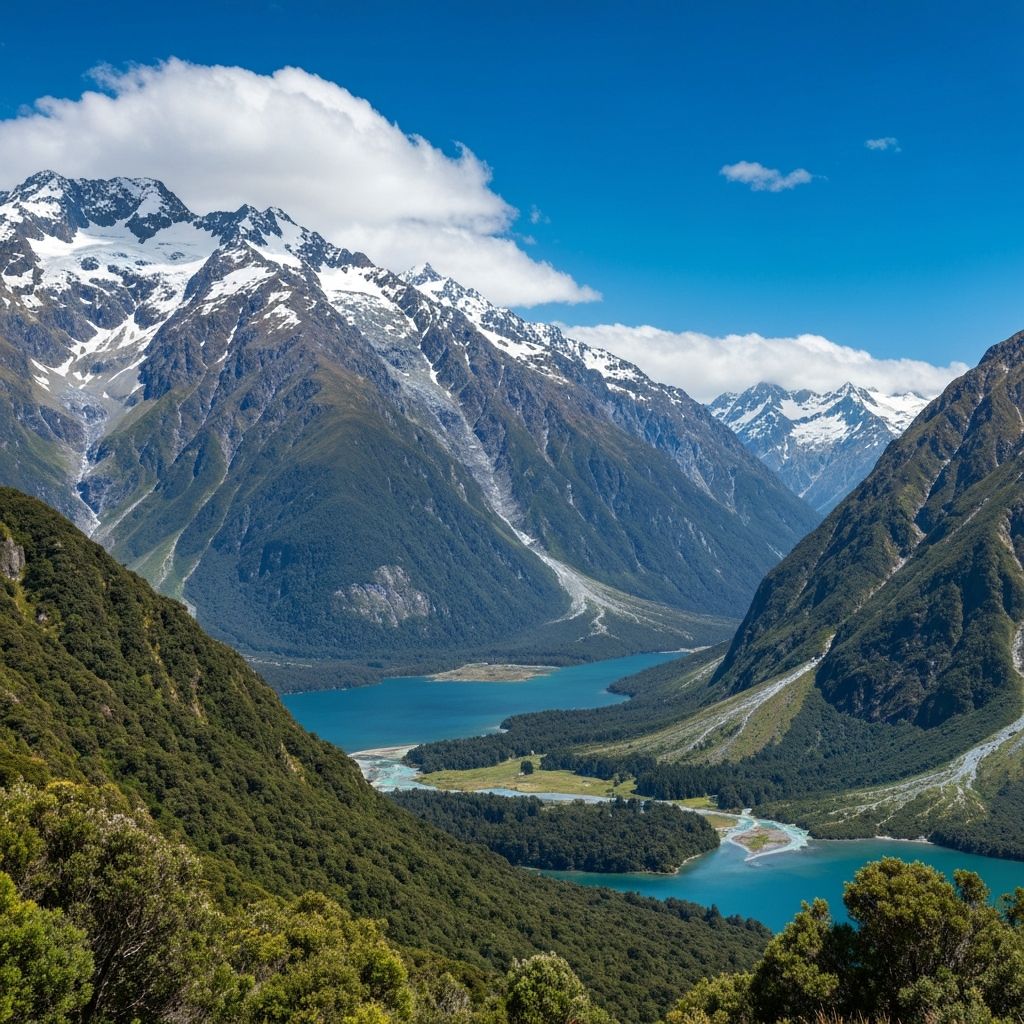
Planning Your First Trip to New Zealand: A Step-by-Step Guide for First-Time Visitors
Plan your first New Zealand trip step by step: entry requirements, timing, itinerary pacing, driving, biosecurity, safety and everyday practicalities.
A first trip to New Zealand is easy to dream about and surprisingly easy to over-plan. The country looks small on a map, but it is long, hilly and spread across two main islands, and a lot of what makes it memorable (coastlines, mountains, geothermal areas, small towns) sits at the end of a slow road. The most common first-timer mistake is trying to see everything.
This guide is about the order in which to plan. It walks through the decisions that matter most, in the sequence that tends to save the most trouble: what you need to enter the country, when to go, how to shape a realistic route, how to get around, what to book first, what to do about the border's strict biosecurity rules, and the everyday practicalities that surprise visitors. Where another guide on this site covers a topic in depth, this one gives you the summary and points you to it.
The practical facts here were checked against the organisations responsible for them, such as Immigration New Zealand, the Department of Conservation (DOC), New Zealand Police, the Ministry for Primary Industries (MPI) and New Zealand Customs Service, as at October 2026. Rules and prices change, so treat this as a planning framework and confirm time-sensitive details with those organisations before you travel.
The Order That Works for Planning a First Trip
Planning feels overwhelming when everything seems to depend on everything else. In practice, a few decisions unlock the rest. If you settle them in this order, later choices (where to stay, how long to spend in each place) become much easier.
The table sets out a sensible sequence. You can overlap the steps, but try not to book anything non-refundable until the first three are settled.
| Step | What to settle | Why it comes at this point |
|---|---|---|
| 1. Entry | Whether you need an NZeTA or a visa, and whether your passport qualifies | Everything else depends on being allowed to travel on your chosen dates |
| 2. Timing | Which months suit your interests, and how long you can stay | Season decides weather, daylight, crowds and which activities are open |
| 3. Route | Which regions to include, and how many bases to use | Distance and pace decide how many places are realistic |
| 4. Transport | Driving, coach, rail, ferry, flights, or a mix | Transport shapes both the route and the booking order |
| 5. Bookings | What to reserve early and what to leave flexible | Some things sell out in peak periods; others are better left open |
| 6. Preparation | Packing, biosecurity, insurance, connectivity, safety plans | These are quick to do once the trip has a shape |
Step 1: Check What You Need to Enter New Zealand
Entry permission comes first because it depends on your nationality and your plans, and it is easier to sort out before you pay for flights. Most visitors need either an NZeTA (New Zealand Electronic Travel Authority) or a visa. Citizens of visa waiver countries and territories generally need an NZeTA, some travellers need a visa instead, and Australian citizens do not need either. This guide only summarises the points; for the full picture, read our complete guide to the NZeTA application and our overview of New Zealand travel requirements for 2026.
Immigration New Zealand (INZ) decides whether you are granted an NZeTA or a visa, and whether you may enter at the border. The points below come from INZ's published guidance as at October 2026.
- NZeTA or visa: an NZeTA is valid for two years for travellers and allows multiple visits while it is valid. Each visit can last up to three months (six months for UK citizens), and you cannot spend more than six months in New Zealand in any 12-month period.
- Passport: apply with the passport you will travel on. It must be valid for at least three months after the date you intend to leave New Zealand.
- New Zealand Traveller Declaration (NZTD): everyone arriving must complete this online or in the NZTD app. INZ says you can complete it from 24 hours before you travel by air, and Customs says it must be done before you reach passport control.
- Onward travel: at check-in you must be able to show that you intend to leave New Zealand, for example with an already-paid ticket out of the country.
- Funds: you may be asked to show you can support yourself. INZ's guidance refers to NZD 1,000 per month, or NZD 400 per month if your accommodation is prepaid. These are funds you may be asked to show, not a fee and not a suggested travel budget.
- Genuine visitor, health and character: you must intend to visit and then leave, meet the health and character requirements, and not be coming for medical treatment. If you plan to stay longer than the visit limit above, INZ says to apply for the appropriate visa and have it before you arrive.
When to apply
Step 2: Choose When to Go and How Long to Stay
New Zealand's seasons are the opposite of those in the Northern Hemisphere, so a December trip means summer, not winter. Each season suits different priorities, and we cover the month-by-month detail in our seasonal guide to visiting New Zealand. For planning purposes, a few points are worth knowing in advance.
Peak periods book out faster. Interislander, a Cook Strait ferry operator, lists the Christmas break, school holidays, long weekends, Waitangi Day, Easter, Anzac weekend, Matariki, King's Birthday and Labour weekend as times that book out faster, especially for passenger vehicles. The Ministry of Education's published term dates show that school summer holidays start no later than 19 December 2026 and run for five or six weeks, so late December into January falls within the school holidays and is a busy time to book.
Daylight saving and time zones
Sun, weather and daylight
Step 3: Shape an Itinerary You Can Enjoy
New Zealand consists of two main islands, the North Island and the South Island, separated by Cook Strait. Regions that first-time visitors often consider include Auckland and Northland, Rotorua and the central North Island, Wellington, the top of the South Island, Christchurch and Canterbury, Queenstown and Fiordland, and the West Coast. Our guide to the top destinations for first-time visitors covers what each offers, so this section concentrates on pacing.
NZ Transport Agency (NZTA) says that many New Zealand roads are hilly, narrow or winding, so a journey may take longer than you expect. Check realistic travel times with NZTA's Journey Planner rather than guessing from a map. The pacing suggestions below are editorial rules of thumb, not fixed routes.
Count nights, not sights
| Trip length | Sensible approach | Common mistake |
|---|---|---|
| About one week | Stay in one region, or two that are close together, and use day trips | Trying to include both islands |
| Around two weeks | Explore one island in depth, or link both islands with a single flight or ferry crossing | Changing accommodation almost every night |
| Three weeks or more | Include both islands with a few longer stays and some unscheduled days | Filling every day with a booked activity |
Step 4: Work Out How You Will Get Around
Driving on the left: what visitors need to know
New Zealand drives on the left. NZ Police advise visitors to rest before long road trips, especially after a long flight, and say you are required by law to carry your driver licence when you are driving. They also say speed limits are rigorously enforced, with fixed and mobile speed cameras operating throughout the country. All drivers and passengers must wear a seatbelt, children under seven must be buckled into approved child restraints, and using a mobile phone while driving is illegal except to make an emergency 111 call. If you are driving slowly, Police say to pull over where it is safe and let faster traffic pass.
NZTA says driving here may differ from your home country, and that all drivers must know the road rules and what the road signs mean. Read the Road Code produced by NZTA before you drive.
Can you use your home driver licence?
Campervans and overnight parking
| Option | Suits | Things to weigh |
|---|---|---|
| Rental car or campervan | Flexible routes, small towns, scenery stops | Driving on the left, long and winding roads, tiring after a flight, parking and overnight rules |
| Coach services | Linking towns without driving | Check routes and timetables for the places you want to reach |
| Scenic rail | Scenic journeys as a highlight of a trip | Check which services run on your dates and where they go |
| Domestic flights | Saving time between distant regions | Baggage rules, airport transfers, and fewer chances to see the countryside |
| Cook Strait ferries | Crossing between the islands with or without a vehicle | Vehicle spaces book out faster in peak periods; foot passenger spaces are often easier to get |
Step 5: Book in a Sensible Order
- Book early: international flights, a vehicle or campervan for peak periods, Cook Strait ferry space if you are taking a vehicle, and accommodation in popular places during school holidays and long weekends.
- Check booking rules for multi-day walks: on DOC's Great Walks, huts and campsites must be booked in advance (on some tracks only during the Great Walks season, on others all year), and staying without a valid booking can mean a penalty or being turned away if the hut or campsite is full. Check the page for your track.
- Book once you know your plans: popular tours and activities, especially those that depend on weather, where a flexible or refundable booking is helpful.
- Leave flexible: a few unscheduled days, so you can respond to forecasts, road closures and your own energy.
Read the cancellation terms and the extras
Step 6: Pack for the Weather and the Border
What the border asks of you
Everyone must complete the New Zealand Traveller Declaration and answer every question. After passport control and baggage collection you go through biosecurity screening, and you may be stopped at any stage. MPI says to declare any food (cooked, uncooked, fresh, preserved, packaged or dried), plant and animal products, and items that have been used for outdoor or farming activities, including any footwear, tents, camping, hunting, hiking, golf or sports equipment. MPI's arrival message also lists dirty boots and dirty shoes as risk items, so clean outdoor footwear and gear thoroughly before you fly.
Customs also asks you to declare other items, such as medicine over a three-month supply or medicine not prescribed to you, and large amounts of cash. Check Customs for the current allowances.
Declare it or dispose of it
Everyday Practicalities: Money, Power, Water and Time
- Prices and tax: the Commerce Commission says menu and signage prices at cafes and restaurants should include GST (goods and services tax). Customs says you cannot get GST refunds on items you buy in New Zealand, and that buying without GST means purchasing from a duty-free shop and having the item delivered to an airside location for departing travellers. The Commerce Commission suggests comparing duty-free prices with local shops, because other sales may work out cheaper.
- Tipping: the Commerce Commission says tipping is optional and that no tip should be shown on the bill, though you can tip if you wish.
- Electricity: INZ describes the supply as 230 to 240 volts, with outlets for plugs with three flat pins, one of them an earth pin. You may need an adaptor, and you should check that appliances can run at 240 volts before plugging them in.
- Tap water: INZ says tap water in New Zealand cities and towns is of drinking quality. In the backcountry, DOC says water at some campsites is untreated and should be boiled before use, so check the facilities before you set out.
- Mobile data: NZ Police say coverage is good in urban areas but unlikely to be reliable in the backcountry. Our guide to staying connected in New Zealand compares ways to get data.
Staying Safe, Healthy and Covered
Most visits are trouble free, and a little preparation makes a difference when something goes wrong. The national emergency number is 111, which connects you to Police, Fire or Ambulance. The call is free, and works from a mobile phone even if it has no credit. NZ Police also note that Spark, Vodafone and 2degrees offer a service where you can text your location and travel details to 7233 with the word SAFE, so Police can access it if they need to find you.
Insurance is the other safety net. ACC, New Zealand's accident compensation scheme, covers visitors who are injured in an accident in New Zealand, but ACC says it does not cover illness, disrupted travel or emergency flights home. Our travel insurance guide for New Zealand explains what to look for, including cover for the activities you plan to do.
Outdoor safety
Keeping belongings secure
Respecting People and Places
Frequently Asked Questions
Do I need an NZeTA or a visa for my first trip to New Zealand?
Most visitors need one or the other. Citizens of visa waiver countries and territories generally need an NZeTA, some travellers need a visa instead, and Australian citizens need neither. Immigration New Zealand decides, so check your own situation before booking. The complete NZeTA guide linked earlier explains how the options fit together.
How far ahead should I plan a first trip?
Settle your entry requirements and dates first, then book flights and the items that sell out in peak periods. Immigration New Zealand's guidance for NZeTA processing is to allow 72 hours, with checks that can take up to three days or longer, so do not leave it until the last minute.
How many places can I fit into a first trip?
Fewer than you probably think. Roads are often narrow and winding and journeys take longer than the map suggests, so many visitors do better with a small number of bases and day trips. Use the pacing table above as a starting point and add buffer days.
Can I drive in New Zealand on my home licence?
Visitors can generally drive on a current and valid overseas licence or driver permit, within a time limit that NZTA sets and counts from your arrival. NZTA says you must carry your licence and, if it is not in English, also have an accurate English translation or an international driving permit. The time limit has been changing, so check NZTA's current guidance for your licence type and arrival date before you travel.
What can I not bring into New Zealand?
Declare any food, plant and animal products, and used outdoor gear such as footwear, tents and hiking or sports equipment, and clean boots and gear before you fly. If you are unsure about an item, declare it or use an amnesty bin at the airport. MPI and Customs publish the current rules.
Is tipping expected, and can I claim GST back on purchases?
The Commerce Commission says tipping is optional and that no tip should be shown on the bill. Customs says you cannot get GST refunds on items you buy in New Zealand; buying without GST means using a duty-free shop with delivery to an airside location for departing travellers.
What number do I call in an emergency?
Call 111 for Police, Fire or Ambulance. The call is free and works from a mobile phone without credit. Outdoors, do not rely on mobile coverage in the backcountry; DOC's Land Safety Code advises taking a distress beacon.
Your First-Trip Planning Checklist
- Check whether you need an NZeTA or a visa, and that your passport is valid for at least three months after you plan to leave New Zealand.
- Choose your travel months and length of stay, bearing in mind school holidays, long weekends and the Great Walks season.
- Pick a small number of bases and allow at least two nights in each, with buffer days.
- Decide how you will travel between regions, and check your licence rules if you plan to drive.
- Book flights, peak-period vehicles and ferries, and popular accommodation, with flexible terms where possible.
- Arrange travel insurance that matches your activities, and save the policy details where you can reach them offline.
- Plan your mobile data, and download offline maps and your confirmations.
- Pack layers, sun protection and clean outdoor gear, and check what you must declare at the border.
- Complete the New Zealand Traveller Declaration within the window Immigration New Zealand allows, and keep your NZeTA confirmation email handy.
- Save 111 on your phone, share your itinerary with someone at home, and check forecasts before outdoor activities.
Ready to Apply for Your NZeTA?
Start your New Zealand adventure today with a quick and easy NZeTA application
Request an NZeTA