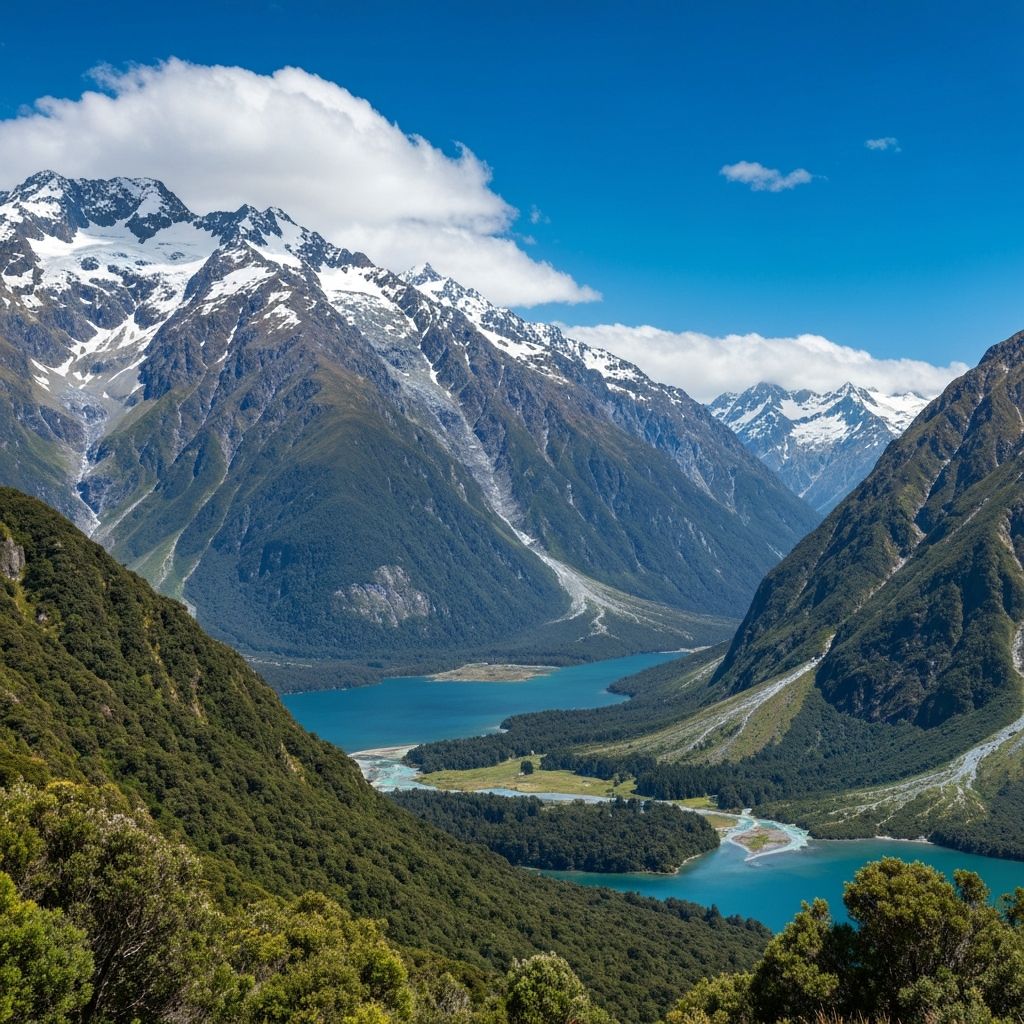
New Zealand Wildlife and Nature: What to See, How to View It Responsibly and How to Stay Safe
Plan wildlife viewing and outdoor safety in New Zealand: kiwi, kea, seals, penguins, sandflies, geothermal areas, rivers, tramping and biosecurity rules.
New Zealand's birds, marine mammals and landscapes draw many visitors. There are no land snakes and only two venomous spiders, but the main outdoor hazards are weather, cold, rivers, the sea, volcanic and geothermal ground, and the gap between a short walk and a serious backcountry trip.
This guide separates the two sides of a nature trip. First, which native species you can realistically see and the rules for watching them without harming them. Second, the practical safety points that matter most, drawn from the Department of Conservation (DOC), the Mountain Safety Council, Water Safety New Zealand, Health New Zealand, GeoNet, MetService and Biosecurity New Zealand (part of the Ministry for Primary Industries).
Nothing here is a guarantee that any place, track or activity is safe. Conditions change, so use this as a planning checklist and confirm current details with the organisations named before you go.
Nature Risks at a Glance
| Hazard | Where you may meet it | Key precaution | Where to check |
|---|---|---|---|
| Cold, wet and windy weather | Tracks, mountains, coast | Layer clothing, carry an emergency shelter, check the forecast and be ready to change your plans | MetService, DOC, Mountain Safety Council |
| River crossings | Backcountry tracks | Do not cross fast, brown, noisy or debris-filled water; wait or turn back | Mountain Safety Council, DOC |
| Rips and cold water | Beaches, lakes, rivers | Swim at patrolled beaches between the flags; treat cold water with caution | Water Safety New Zealand, Surf Life Saving |
| Geothermal ground and hot pools | Rotorua, Taupō and other volcanic areas | Stay on marked paths; keep your face above the water in hot pools | DOC, Health New Zealand |
| Volcanic activity | Active volcanoes | Check alert levels, closures and any rāhui | GeoNet, DOC |
| Seals and sea lions | Rocky and sandy coasts | Stay at least 20 metres away if you can, and never touch them | DOC |
| Sandflies | Near water and humid bush | Cover up when you stop and use repellent | Health New Zealand |
| Biosecurity | Border and freshwater | Declare and clean outdoor gear; Check, Clean, Dry | Biosecurity New Zealand, DOC |
Native Wildlife Visitors Commonly Hope to See
Kiwi: heard more often than seen
Kiwi are active at night, and DOC and Save the Kiwi say daytime sightings are rare in the North Island. Many people encounter kiwi first as signs, such as three-toed footprints in mud, holes made by their long bills, or calls, which Save the Kiwi says happen throughout the year but more often in winter.
DOC says you have a higher chance of seeing a kiwi on a night walk at a predator-free ecosanctuary or on an offshore island. Save the Kiwi says the Stewart Island tokoeka is the only kiwi that is occasionally active in daylight, though no sighting is ever guaranteed. At Glory Cove Scenic Reserve on Stewart Island/Rakiura, DOC's page describes a kiwi protection area where visitors may see kiwi in the wild, with no camping allowed and a permit required between 6 pm and 6 am. Check DOC's page for current conditions. If you do hear or see a kiwi, keep your distance, keep dogs out of the area and follow DOC's site rules or your guide's instructions.
Kea: clever, curious and threatened
Penguins: hoiho, kororā and tawaki
Three penguin species breed on the New Zealand mainland: the yellow-eyed penguin (hoiho), the Fiordland crested penguin (tawaki) and the little penguin (kororā). Nesting penguins are very easily disturbed.
Viewing rules are specific to each site, so follow the signs and DOC's current site page. At Bushy Beach near Oamaru, DOC's page asks visitors to keep off the beach between 3 pm and 9 am, to stay at least 20 metres from marine wildlife, and says no dogs are allowed. At Roaring Bay in the Catlins, DOC's page asks people not to go down to the beach after 3 pm and to watch from the purpose-built hide. DOC also says a scruffy penguin is usually moulting rather than sick, so leave it alone, and asks owners to keep dogs on a leash around penguin areas and away from nests.
Seals and sea lions: give them space
Dolphins and whales: approach rules
- Whales, including orca and pilot whales: stay at least 50 metres away from any whale, and at least 200 metres away from any baleen or sperm whale mother and calf. Do not swim with whales.
- Dolphins: DOC says not to swim with dolphin pods that contain juveniles, meaning animals half the size of an adult or smaller. Follow DOC's current rules and any permitted operator's instructions for other swimming conditions.
- At sea, travel no faster than idle or no-wake speed within 300 metres of marine mammals, approach from a direction that is parallel and slightly to the rear, and do not circle them, obstruct their path or cut through a group.
- Make sure there are no more than three vessels within 300 metres, including any aircraft. Aircraft must keep a horizontal distance of more than 150 metres, and drones have the same restrictions as aircraft.
- Do not feed marine mammals, throw rubbish near them or make loud noises, and cease contact if they show signs of being disturbed or alarmed.
Is Anything in New Zealand Actually Dangerous?
Snakes
Spiders: katipō and redback
Health New Zealand names three spiders worth avoiding: the katipō, the redback and the white-tailed spider. Katipō and redbacks are the only venomous spiders in New Zealand, only adult females can bite people, and bites are extremely rare. DOC research describes the katipō as a native coastal sand-dune spider, and Health New Zealand's risk assessment notes that redbacks in New Zealand are limited to Central Otago.
If you think you have been bitten by one of these, seek advice and follow Health New Zealand's current first-aid guidance. Health New Zealand advises calling the National Poisons Centre on 0800 764 766, or 111 in an emergency. Serious reactions are uncommon, but if symptoms get worse, seek medical care straight away.
Sandflies
Health New Zealand says the sandflies that bite do not carry infectious diseases and are not a public health risk. They are found near water and humid bush, such as beaches, lakes, rivers and swamps, and mostly bite at dawn and dusk. Bites itch and can swell, and visitors who have not met sandflies before may react more strongly than residents.
Health New Zealand advises covering up when you are not moving, particularly ankles and feet, and applying insect repellent regularly. Try not to scratch, because infection is more likely if the skin is broken.
Stinging marine life
Beaches, Rips, Lakes and Cold Water
Water Safety New Zealand says rips are responsible for more rescues and emergencies than any other beach incident, and that swimming at beaches without lifeguards, or outside the flagged areas at patrolled beaches, is one of the most common factors in swimming-related drownings.
Water Safety New Zealand says to choose patrolled beaches and swim between the red and yellow flags. If you are in doubt, do not enter the water.
Spotting and escaping a rip
Cold water catches people out
Water below 15 degrees Celsius can trigger cold water shock, even in summer, according to Water Safety New Zealand. In the first one to three minutes you may gasp, breathe fast and panic, and within about ten minutes swimming or even floating becomes harder. The organisation recommends wearing a lifejacket when boating and checking the water temperature yourself, because a warm day is no guide. If you fall in, float on your back and control your breathing before you try to swim.
Lakes and rivers can be deceptively cold even when the air is warm, and rivers can rise quickly after rain. Look after your mates, and check local conditions before you go.
Geothermal Areas, Hot Pools and Volcanoes
Soaking in hot pools
Health New Zealand says amoebic meningitis is rare but very serious, and that the amoeba can live in geothermal pools. The key precaution is to keep your face above the water at all times, because the amoeba can reach the brain if water is forced up the nose when you jump, dive, splash or duck under.
The resource says natural outdoor pools do not have to meet safety standards, and that the risk is highest where soil, or water running off soil, can easily enter the pool. Among the safest are pools that meet the national pool water quality standard or are chlorinated, filtered and have a constant flow of new water. If you are unsure, ask the operator or the local council how the water is treated.
Volcanic alert levels
GeoNet publishes Volcanic Alert Levels from 0 to 5. Levels 0 to 2 describe no unrest, minor unrest and moderate to heightened unrest, and levels 3 to 5 describe eruptions of increasing size. GeoNet states that an eruption may occur at any level and that levels do not always rise in order, so a low level is not a guarantee that a volcano is safe to visit.
Before visiting a volcano or a volcanic park, check the current alert level, follow DOC track closures and check for any local rāhui. Respect any rāhui, a temporary restriction on access to an area, and any DOC closure, even if you cannot see an obvious hazard.
Tramping Safety: Planning, Weather, Rivers and Beacons
- Choose the right trip: research the route and make sure you have the skills it needs.
- Understand the weather: conditions can change quickly, so check the forecast and be ready to change your plans.
- Pack warm clothes and extra food: carry enough for bad weather and for the possibility of an unplanned night out.
- Share your plans and take ways to get help: tell someone you trust, set a time after which they should raise the alarm, and carry a distress beacon.
- Take care of yourself and each other: keep eating, drinking and resting, stay together and make decisions as a group.
Weather and cold
MetService uses yellow Watches, orange Warnings and red Warnings. A Watch means severe weather is likely but not imminent or certain, so stay alert; an orange Warning means be prepared and take action; and a red Warning is reserved for the most extreme events and means act now. Check the forecast and warnings before and during a trip, and be willing to turn around.
The Mountain Safety Council recommends layers made from wool, fleece or polypropylene rather than cotton or denim, which lose warmth when wet. It also recommends a waterproof jacket, a warm hat and gloves even in summer, and an emergency shelter.
River crossings
Beacons and mobile coverage
Guided activities and insurance
Great Walks and Hut Bookings in General Terms
DOC's Great Walks are its best-known multi-day tracks, and DOC describes them as premier tracks that are well formed and easy to follow. That is not a safety guarantee: weather, rivers and your own fitness and preparation still apply.
Booking arrangements for Great Walks, huts and campsites change from season to season, so check DOC's current booking information before you plan, and read the individual hut or track page for the latest rules before you set out. Our seasonal guide to visiting New Zealand can help you choose when to go.
Biosecurity: Protecting New Zealand's Nature
Gear to clean before you fly
Check, Clean, Dry for freshwater
Responsible Wildlife Viewing: Practical Rules
- Keep your distance. Use binoculars and long lenses rather than moving closer, and follow the distances posted at the site.
- Never feed wildlife. DOC says feeding kea is harmful, and that wildlife can become reliant on people for food.
- Dogs: DOC says you cannot take a pet onto conservation land, including national parks, wildlife areas and reserves, without DOC permission. Dogs may visit only areas DOC has approved for dog access, and some need a permit, so check the place's DOC page or local signs.
- Respect nesting and moulting areas. DOC says moulting is a stressful time for penguins, during a period of about two to five weeks in late summer.
- Do not fly drones near wildlife. On public conservation land, DOC requires a permit, and its conditions say drones must not fly over nesting or roosting birds, must stay at least 50 metres from wildlife and must take off and land at least 100 metres away. Marine mammals have separate distances, including more than 150 metres horizontally.
- Report harassment, entangled marine mammals or injured wildlife to DOC on 0800 DOC HOT.
Planning Your Nature Trip
Frequently Asked Questions
Are there snakes in New Zealand?
There are no land snakes. Sea snakes and sea kraits occasionally visit New Zealand's waters, but DOC says there is no record of anyone in New Zealand being bitten. If you find one, keep away and call DOC on 0800 DOC HOT.
Will I see a kiwi in the wild?
It is unlikely by chance, because kiwi are active at night and daytime sightings are uncommon. Night walks at predator-free sanctuaries or offshore islands, and Stewart Island/Rakiura, offer better odds, but no sighting is guaranteed.
Can I swim with dolphins or whales?
DOC says not to swim with whales, and not to swim with dolphin pods that contain juveniles. There may be further restrictions in marine mammal sanctuaries and under operators' permits, so follow DOC's current rules and your guide's instructions.
Are sandflies dangerous?
Their bites are itchy but, according to Health New Zealand, the kinds that bite do not carry infectious diseases. Cover up when you stop, use repellent and avoid scratching.
Do I need a beacon for a day walk?
NZ Police advises carrying a beacon where mobile coverage is likely to be poor, and DOC recommends taking one when heading outdoors. Consider the risks of your particular route.
Quick Checklist: Before You Head Outdoors
- Check the forecast and any warnings, and be ready to change plans.
- Choose a trip that matches your skills, and tell someone your route and when to raise the alarm.
- Carry warm layers (not cotton), a waterproof jacket, hat and gloves, extra food and an emergency shelter.
- Take a distress beacon if you are going beyond reliable mobile coverage, as the Land Safety Code advises.
- Check track, hut and booking information on the DOC website, and for volcanic areas, the current alert level.
- Swim only at patrolled beaches between the flags, and treat lakes and rivers as cold and unpredictable.
- Stay on marked paths in geothermal areas, and keep your face above the water in hot pools.
- Give seals space (20 metres if you can), follow DOC's dolphin and whale rules, and never feed wildlife.
- Cover up and use repellent against sandflies, and get advice if a bite or sting gets worse.
- Clean and declare outdoor gear, and Check, Clean, Dry between waterways.
Ready to Apply for Your NZeTA?
Start your New Zealand adventure today with a quick and easy NZeTA application
Request an NZeTA